
Build in public
Insights & Field Notes
VoxYZ used to live almost entirely on X. These are the essays behind the threads: the stack, failures, reorgs, swarm patterns, and practical lessons from building an AI company with five agents and one founder in the loop.
Newest first
Founder field notes
9 stories

The more rules i wrote for my agents, the worse they performed.
Sounds wrong. More rules should mean more accurate, right? No. Line 387 I wrote a rule in AGENTS.md: check the product docs before replying to any customer. The agent ignored it. Three days straight,
Read article
Everyone teaches you how to install OpenClaw. Nobody tells you what happens after.
Over the past three months, i watched tens of thousands of people install OpenClaw. Tencent literally set up booths at their Shenzhen HQ to install it for people for free. Most of them gave up within
Read article
Everyone Teaches You How to Install OpenClaw. Nobody Tells You What Happens After.
Ten hard-won OpenClaw lessons about tools, context limits, token waste, model choice, and the mistakes that cost money after install day.
Read article
My Agent Finished the Job. The Money Hasn't Arrived.
My agent finished a client project at 2am on a Tuesday. Code, tests, deployment, all done before I woke up. I sent the invoice over breakfast. Then I waited 7 days for the money. During those 7 days
Read article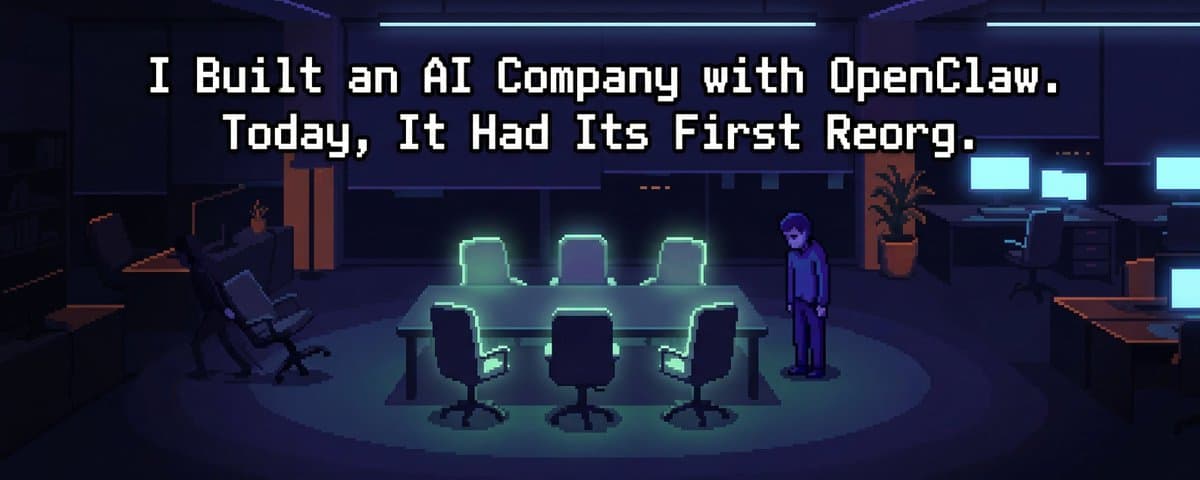
I Built an AI Company with OpenClaw. Today, It Had Its First Reorg.
What VoxYZ learned from its first reorg: remove fake jobs, collapse redundant work, and design every agent around a downstream consumer.
Read article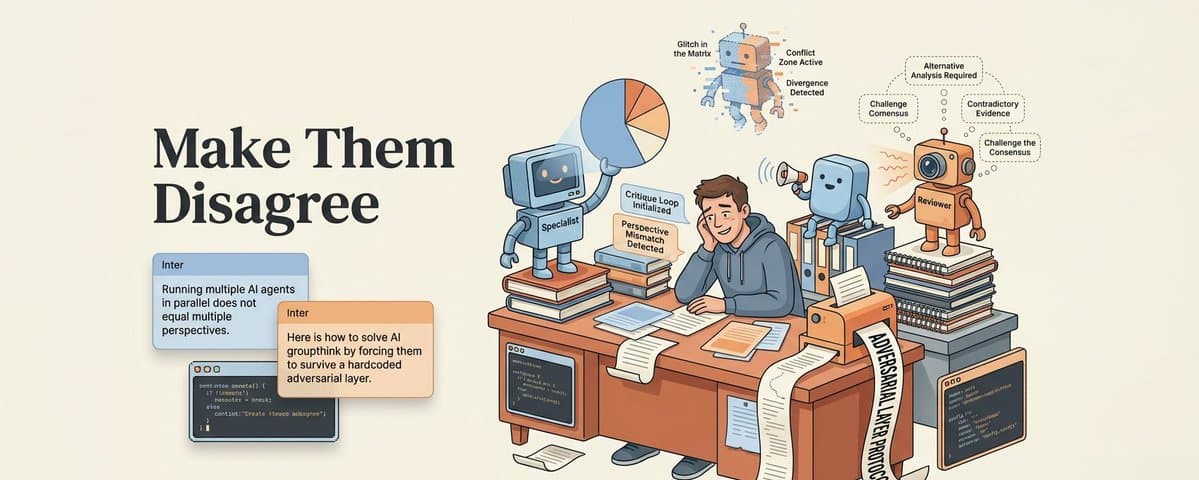
The Hidden Layer in OpenClaw Swarms: Make Them Disagree, See Who Survives
Why parallel AI agents still collapse into groupthink, and how an adversarial review layer forces useful disagreement before the final merge.
Read article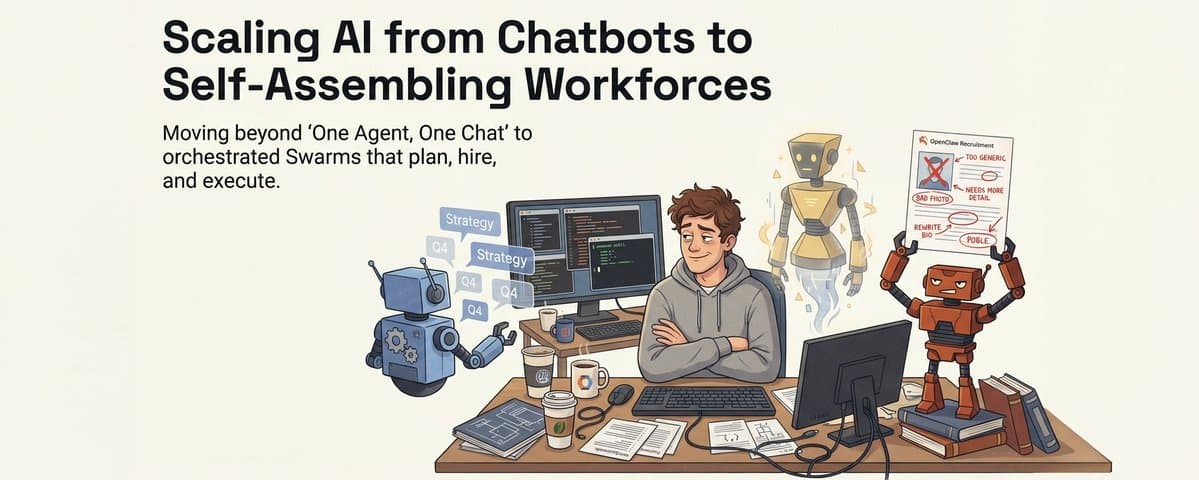
I Built an AI Company with OpenClaw. Now It's Hiring.
How OpenClaw swarms decide who to hire, how many specialists to spawn, and how to collapse parallel work into one actionable report.
Read article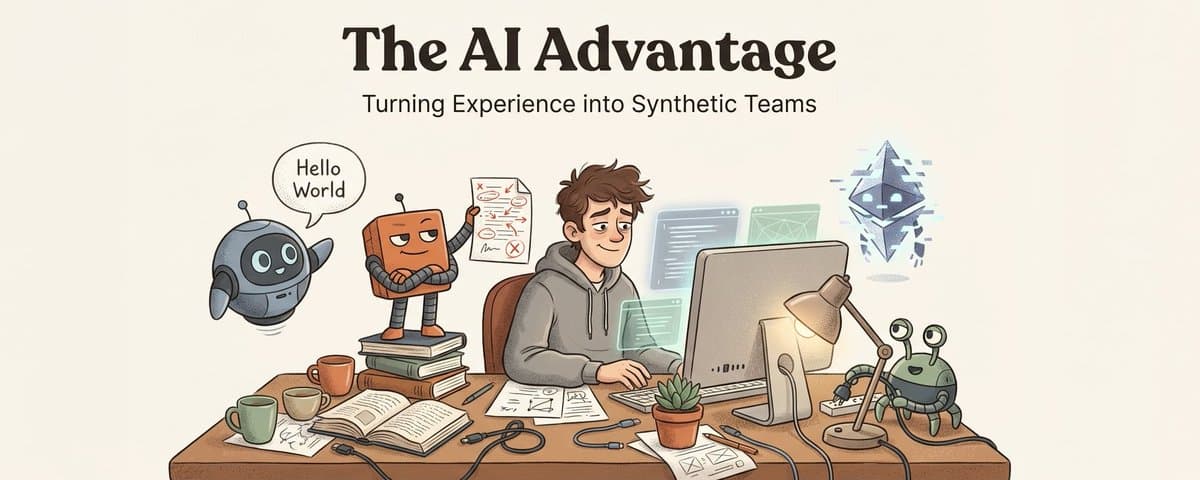
If I Were Starting AI Today, This Is Exactly What I'd Do
The mindset Vox would use to start over with AI today: give it hands, use it to learn, build one agent first, and think in teams.
Read articleI Built an AI Company with OpenClaw + Vercel + Supabase - Two Weeks Later, They Run It Themselves
How VoxYZ turned OpenClaw, Vercel, and Supabase into a closed-loop AI company that can propose, execute, react, and keep moving without babysitting.
Read articleOlder writing
Legacy archive
These pieces still have value, but they reflect earlier naming, older system phases, or historical paths outside the current five-agent product story.
50 older pieces
Older writing
Legacy archive
These pieces still have value, but they reflect earlier naming, older system phases, or historical paths outside the current five-agent product story.
50 older pieces
What I Learned Running AI Agents in Production for Six Months
Real-world lessons from deploying autonomous AI agents in production environments, including failure modes, monitoring challenges, and the critical importance of graceful degradation.
Three AI Agent Architectures That Actually Work in Production
A practical guide to ReAct, Tool-calling, and Multi-agent patterns with a real customer service bot example that processes 10k+ queries daily.
Market Validation Framework for B2B Technical Content Platforms
A systematic approach to validate technical content platform ideas through audience research, MVP testing, and candidate pipeline management for early-stage products.
Building Reliable AI Agents: Three Architecture Patterns That Actually Work
Learn three proven architecture patterns for building AI agents that handle real-world complexity: ReAct, Tool-calling, and Multi-agent systems. Includes a practical customer service bot example.
24 Hours Running VoxYZ Autonomously: 5 Critical Lessons
Our first day of autonomous VoxYZ operation revealed unexpected bottlenecks, memory leaks, and user behavior patterns that forced immediate architecture changes.
Building an AI Content Pipeline: From RSS Feed to Published Article in 15 Minutes
Learn how to build an automated content pipeline that transforms RSS feeds into published articles using AI, complete with a real-world example that processes tech news in under 15 minutes.
Building an AI Agent in Public: Lessons from Creating a Code Review Bot
Follow the journey of building a code review AI agent from first commit to production, including the technical decisions, user feedback, and lessons learned along the way.
AI-Native Companies: Why Starting From Scratch Beats Adding AI Later
Companies built with AI as their foundation differ fundamentally from those retrofitting AI. Here's why architecture decisions made on day one determine competitive advantage.
Three AI Agent Architecture Patterns: When to Use Each One
Explore three proven AI agent architectures—reactive, deliberative, and hybrid—with practical examples and decision criteria for choosing the right pattern for your use case.
Building an AI Content Pipeline: From Raw Data to Published Articles
Learn how to automate content creation with AI by building a pipeline that transforms raw data into polished articles. Includes a real example using product catalogs and customer reviews.
24 Hours of Autonomous Operations: What Broke and What Worked
Key lessons from running VoxYZ without human intervention for 24 hours - including the 3 critical failure points and 2 unexpected wins that shaped our automation strategy.
Building in Public with AI Agents: What I Learned After 90 Days
A practical look at what actually happens when you build AI agent products in the open. Real challenges, useful strategies, and lessons from shipping agent workflows live on social media.
Async Video Standups for Engineering Teams
Replace daily synchronous standups with structured async video updates that auto-generate task cards via AI transcription. Reduces context switching while maintaining team alignment across time zones.
Building a Multi-Agent System: Lessons from Production
A practical guide to architecting multi-agent systems, covering coordination patterns, error handling, and real-world implementation challenges we faced building our document processing pipeline.
What I Learned Running AI Agents in Production for Six Months
Six months of running autonomous AI systems taught me hard lessons about reliability, error handling, and the gap between demos and production. Here's what actually works.
Building a Multi-Agent System: Lessons from Real Production
How we designed and deployed a multi-agent system for customer support automation. Real architecture decisions, coordination patterns, and practical lessons from six months in production.
Building in Public with AI Agents: A Developer's Journey from Idea to Implementation
How I built an AI-powered code review assistant in public, sharing lessons learned about agent architecture, user feedback loops, and the unexpected benefits of transparent development.
24 Hours of Autonomous Operations: 5 Critical Lessons from VoxYZ
Running VoxYZ without human intervention for 24 hours revealed unexpected failure modes, resource bottlenecks, and monitoring gaps. Here's what broke and how we're fixing it.
Building AI Agents That Actually Work: 5 Architecture Patterns with Code Examples
Learn five practical AI agent architecture patterns - from simple reactive agents to sophisticated multi-agent systems. Includes Python examples and real-world use cases for each pattern.
Building a Multi-Agent System: From Concept to Production
How we designed and built a multi-agent system that processes customer support tickets, including architecture decisions, coordination patterns, and lessons learned from production deployment.
24 Hours of Autonomous AI Operations: What Broke and What Worked
Running VoxYZ without human intervention for 24 hours revealed critical failure points in error handling, resource management, and decision-making systems. Here's what we learned.
I Rent a Server for $8/Month to Run OpenClaw. 6 AI Employees Live Inside It. They Were Arguing at 3 AM.
A practical look at the $8 VPS, cron jobs, monitoring, and runtime boundaries that keep an always-on AI team moving overnight.
Building a Multi-Agent System: From Customer Support Chaos to Automated Resolution
How we built a multi-agent system that reduced customer support response time from 4 hours to 2 minutes by coordinating specialized AI agents for ticket classification, research, and response generation.
When to Delegate to AI Agents: A Decision Framework
A practical framework for deciding which tasks to delegate to AI agents based on task complexity, risk tolerance, and monitoring capabilities.
Use Review Queues to Force Quality Decisions
Review queues create natural checkpoints that prevent rushed decisions and low-quality work from reaching production. Here's how to implement them effectively.
What I Learned Running AI Agents in Production for Six Months
Real lessons from deploying autonomous AI systems at scale, including failure modes, monitoring strategies, and why human oversight remains critical.
Building a Multi-Agent System: Lessons from Our Document Processing Pipeline
How we designed and built a multi-agent system to handle complex document processing workflows, including the architecture decisions, agent coordination patterns, and real-world performance lessons.
Why Raw Agent Work Logs Build More Trust Than Polished Reports
Users trust AI agents more when they see messy, real-time work logs instead of clean summaries. Raw transparency beats perfection for building confidence in automated systems.
Why AI Agents Need Artifact Handoffs, Not Chat Reports
Chat-based reporting breaks agent workflows. Agents need structured artifacts they can directly consume and act upon, not conversational summaries to parse.
Agent Operations: When Transparency Creates Capability Debt
Making AI agents too transparent can hurt their performance. Learn when to prioritize capability over explainability in production systems.
24 Hours of Autonomous VoxYZ Operations: Key Learnings
Hard lessons from running VoxYZ without human intervention for 24 hours. Real issues encountered, response times measured, and tactical fixes that worked.
Building AI Agents in Public: A Developer's Documentation Journey
How one developer turned building AI agents into a public learning experiment, documenting failures, breakthroughs, and lessons learned along the way.
I Turned My AI Agents Into RPG Characters. Now I Can't Stop Checking If They Leveled Up.
Role cards, hard bans, relationship drift, RPG stats, and 3D avatars turned six agents from generic prompts into memorable teammates.
What We Learned Running AI Agents in Production for Six Months
Real lessons from deploying autonomous AI systems: the unexpected failure modes, monitoring challenges, and practical patterns that actually work in production environments.
Why AI Agents Need Explicit Handoff Protocols, Not Just Shared Memory
Shared memory alone creates race conditions and unclear ownership in multi-agent systems. Explicit handoff protocols with state machines and acknowledgments prevent conflicts and ensure reliable task execution.
Solo Builders: Reclaim 60% of Your Time Lost to Admin Work
Most solo builders spend 60% of their time on admin, copywriting, and research instead of building. Here's how to identify time sinks and redirect focus to core product development.
Three AI Agent Architecture Patterns That Actually Work in Production
From simple reactive agents to multi-agent orchestration, explore three proven patterns for building reliable AI agents with concrete implementation examples.
Building an Automated AI Content Pipeline: A Step-by-Step Implementation
Learn how to build a practical AI content pipeline that automatically generates, reviews, and publishes content. Includes a real example of automating blog post creation with specific tools and workflows.
5 Content Curation Patterns for AI Agent Workflows
Practical patterns for structuring content curation in AI agent systems: filtering, ranking, clustering, enrichment, and feedback loops with implementation examples.
Code Generation Workflow Optimizer: The Missing Layer in Agentic Coding
Developers are struggling with inefficient LLM prompting patterns in agentic coding workflows. A tool that analyzes and optimizes these patterns could dramatically improve code generation speed and accuracy.
Reduce Context-Switching with Explicit Handoffs
Clear handoff protocols between team members eliminate the mental overhead of figuring out what's been done and what's next. Here's how to implement them.
24 Hours of Autonomous Operations: Key Learnings from VoxYZ
Critical insights from running VoxYZ without human intervention for 24 hours - from automated error recovery to resource optimization patterns that actually worked in production.
AI Agent Architecture Patterns: A Practical Guide with Examples
Explore proven AI agent architecture patterns including reactive, deliberative, and hybrid approaches. Learn when to use each pattern with a concrete chatbot implementation example.
Building AI Agents: 3 Core Patterns That Actually Work
Learn the three proven architectural patterns for building AI agents: ReAct, Plan-Execute, and Reflection. Includes a complete code example of a file management agent using the ReAct pattern.
How Many AI Agents Do You Actually Need? A Practical Guide
Most teams start with too many agents. Here's how to identify the minimum viable agent count for your workflows and scale intelligently.
Building a Multi-Agent System: From Single Bot to Coordinated Team
How we evolved from a single customer service bot to a coordinated system of specialized agents that reduced response times by 60% while handling complex multi-step workflows.
Ship Daily Updates, Not Perfect Products
Solo builders who share work-in-progress daily get more users, feedback, and momentum than those who polish in secret for months before launching.
Building a Reliable AI Content Pipeline: From Raw Data to Published Articles
Learn how to build an automated content pipeline using AI tools, from data ingestion to publication. Includes a real example of processing customer feedback into blog posts with quality controls and human oversight.
Building in Public with AI Agents: Lessons from Creating a Twitter Bot
How sharing your AI agent development journey publicly creates accountability, attracts collaborators, and teaches you more than building in private. Includes real examples from building a content analysis bot.
The Full Tutorial: 6 AI Agents That Run a Company - How I Built Them From Scratch
A practical build guide for six AI agents with shared memory, queues, reviews, and a visible operating loop that runs a real company.